


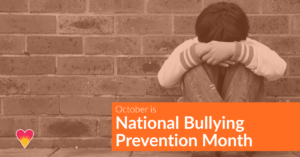
National Bullying Prevention Month was started in October 2006 by PACER’s National Bullying Prevention Center. Historically, bullying has been viewed as a childhood rite of passage, so the goal and purpose of prevention efforts became to raise awareness and reshape society’s view on bullying. The initiative addressed the impacts of bullying, which can include (but are not limited to):
- school avoidance
- loss of self-esteem
- increased anxiety
- depression
- suicidal thoughts
- and more.
In 2011, PACER developed “Unity Day,” which promoted people to wear orange to support anti-bullying. In 2014, the federal government gave a formalized definition to bullying as “unwanted, aggressive behavior among school-aged children that involves a real or perceived power imbalance. The behavior is repeated, or has the potential to be repeated, over time.” In 2022, the federal School Crime Supplement reported that bullying among students ages 12-18 declined compared with a decade earlier. Currently, all 50 states have anti-bullying laws on the books.
What started as a week-long awareness week quickly gained momentum and spread. Due to the success and increased awareness, the event was eventually expanded to the entire month of October.
As a behavioral health organization, Horizon recognizes the severe impact that bullying can have on a child or adolescent’s mental health. Our Child and Adolescent program serves individuals ages 3+ and treats both mental health and substance use concerns, providing support to those who are struggling.
Did you know?
- In 2022, as a result of bullying, students reported the most significant negative effects on their feelings about themselves (27.8%), their schoolwork (19.7%), relationships with family and friends (18.5%), and physical health (13.4%). (National Center for Education Statistics, 2024b)
- Bullying can result in physical injury, social and emotional distress, self-harm, and even death. It also increases the risk of depression, anxiety, sleep difficulties, lower academic achievement, and dropping out of school. (Centers for Disease Control and Prevention, 2025)
- Students who are both targets of bullying and engage in bullying behavior are at greater risk for both mental health and behavior problems than students who only bully or are only bullied. (Centers for Disease Control and Prevention, 2025)
Resources
- Resources – NY Band Against Bullying
- Crisis Services Hotline – 24-Hour Crisis Hotline: 716.834.3131, Kids’ Help Line: 716.834.1144 and 1.877.KIDS.400, Over-the-phone language interpreters available 24/7
- University at Buffalo Alberti Center for Bullying Abuse Prevention – Resources: 716.645.1532
- Growing LGBTQ+ Youth Support (GLYS) Western New York, Inc.: 716-855-0221
- Teen Chat Line
- National Federation for Just Communities of Western New York, Inc.: 716-853-9596
- Prevention Focus/Teen Focus: 716-884-3256
- DASA Report Bullying | BUFFALO
- SAMHSA
- Bullying – Parent Network of WNY
- CyberTipline
- LGBTQ Youth Suicide Hotline: 1.866.4.U.TREVOR
- National Suicide Prevention Lifeline Dial 988
- National Center for Missing & Exploited Children: 1-800-THE-LOST (1-800-843-5678)
- Stopbullying.gov
- Cyberbullying.org
- Connectsafely.org
If you or someone you love is struggling because of bullying, Horizon is here to help. Connect with us today at 716-831-1800 or request an appointment online.